Building muscle doesn’t require a fancy gym or massive equipment. Living in a small apartment hasn’t stopped me from making real gains—calisthenics has turned my living room, tiny bedroom, or even a corner of my hallway into my muscle-building headquarters. Let’s dig into how you can do the same, working with what you’ve got, no matter how small your place is.
Why Calisthenics Works in Small Apartments
Calisthenics is all about using your body weight, so you won’t need to cram big weights or awkward machines into your tight space. Most moves need just a bit of floor area, maybe a sturdy pullup bar or a set of resistance bands. My main training zone fits between my couch and coffee table—if it works for me, it’ll work for you. You get stronger, more athletic, and flexible, all without draining your wallet on gym fees, and you’ll never risk annoying your neighbors with dropped weights.
For beginners, starting with calisthenics means low hassle and almost no investment. You don’t need to buy anything until you really want to. Muscle growth stems from consistent tension, smart progression, and good recovery. You can manage all of that at home—no pricey membership needed.

The Basics: Key Exercises That Build Muscle
Bodyweight workouts don’t need to be plain or boring. Some crucial exercises hit every major muscle group, plus you can adjust them for your strength level and space:
- Pushups: Awesome for chest, shoulders, triceps. If standard ones were too tough at first, I did knee pushups and built up over time.
- Pullups or Doorway Rows: A pullup bar fits on most solid doors. If pullups are out of reach, start with negatives or try rows with a solid table.
- Squats and Lunges: These blast your legs and glutes. Start with bodyweight, and progress to slow or singleleg forms for extra challenge.
- Dips: Try these on a pair of sturdy chairs or use a low table edge.
- Planks and Leg Raises: Blast your core on your floor or mat, zero equipment needed.
The trick is to make exercises more challenging over time. Change the angle, slow the tempo, add holds, or test singlelimb versions—keep your muscles working hard.
How Calisthenics Progression Actually Works
Progressive overload means you keep asking your body to do a bit more each session. Here’s my at-home, small-space approach:
- More reps or sets: If an exercise stops challenging me, I tack on extra reps or another set.
- Harder variations: Pushups went from knees, to regular, to decline, to diamond, and archer. Pullups shifted from negatives to assisted, to regular, then wide grip. There’s always a tougher version to test your strength.
- Slower tempo: Take 3–4 seconds lowering or pausing. That slow burn ramps things up.
- Pauses and holds: Pause at the bottom or top of a movement; isometric holds wake up your muscles without the need for weights.
- Equipment tweaks: Loop a resistance band or fill a backpack with books to load up any move—these extras don’t clutter up your apartment afterward.
I like to jot down my efforts in a notebook: which moves I did, my reps, how they felt. Watching slow, steady progress is motivating and pays off physically as well.
How To Set Up Your Workout Space
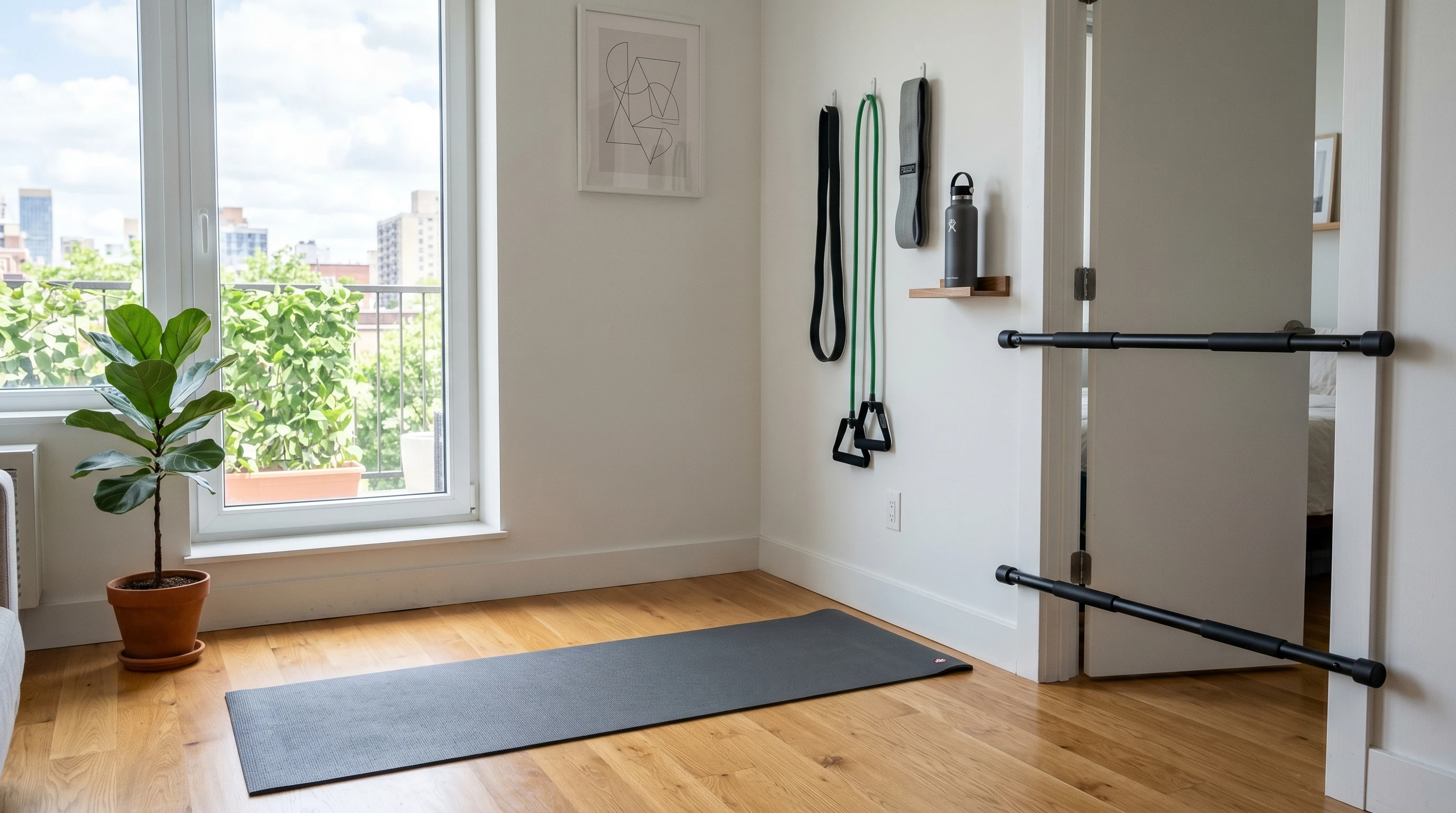
A simple yoga mat marks my training zone and keeps sessions comfortable. Here’s an easy set-up for most small apartments:
- Clear about 6 to 8 feet of floor. Move a coffee table, shift a chair if needed.
- If you can, install a doorway pullup bar. Removable bars are gentle on door frames—just double-check the weight limit.
- Bands, sliders, or a tiny set of parallettes can be stored in a basket or under your bed.
- Having a towel handy helps with grip and sweat.
Keep your gear close and your area inviting—it’s the best way to make workouts a habit.
Programming Your Calisthenics Routine
You don’t need anything complicated for real results. A fullbody split, three or four times each week, works wonders. Here’s a template you can follow:
- Warm-up: Five minutes of arm circles, bodyweight squats, lunges, and jumping jacks.
- Main Workout:
• Pushups: 3 sets (pick a version for 8–15 reps)
• Rows or Pullups: 3 sets (try negatives if regular pullups are too much)
• Bulgarian Split Squats or Lunges: 3 sets per leg
• Dips: 2 or 3 sets
• Planks or Hollow Holds: 2–3 sets at 30–60 seconds each - Cool Down: Stretch, focusing on the worked areas. Take a few minutes to shake things out.
Rest 60–90 seconds between sets. As you get stronger, swap in harder moves or up your reps. Bands or a loaded backpack add challenge while taking up minimal space.
Things To Think About Before You Get Started
Like any new fitness adventure, it’s worth checking out a few big factors for growth and injury prevention at home.
- Flooring: Apartment floors can be hard or slick—throw down a mat for comfort and joint protection.
- Noise: Avoid banging or thumping, since this can irritate neighbors. Stick to exercises with controlled, quiet movements and skip jumping if noise is an issue.
- Stability: Before you put full weight on chairs or a table, make sure they’re solid and stable.
- Progress: Results aren’t instant. Track your workouts and try to improve a little each week for the biggest gains.
Noise and Apartment Etiquette
I live above someone who works from home, so keeping things quiet is key. I favor steady, deliberate reps—no jumping or dropping stuff. A set of rubber pads helps reduce the noise even more.
Space Hacks
Foldup chairs serve as dip stations. A pullup bar comes down post-workout and slides under the bed. Bands hide easily, so your space stays tidy while keeping your gear accessible.
Form and Safety
Since you don’t have mirrors or trainers, take extra care with your form. Move slowly, focus on full range of motion, and record yourself occasionally for honest feedback.
Advanced Tips and Tricks for More Muscle
When you outgrow the basics, it’s time to take things up a notch.
Ramp Up the Volume: Try pyramid sets—start with higher reps and work your way down. Finish with AMRAP (as many reps as possible) to push near your limit.
OneSided Training: Moves like pistol squats, archer pushups, or onearm planks ask more of you and keep things challenging.
Angle Shifts: Try elevating your feet, staggering hands, or slowing down. These tweaks target new muscles, making things fun.
Isometrics Rock: Add static holds mid-move for a new burn—no equipment required!
Recovery First: Sleep and nutrition make all the difference. Hydrate, stretch, and let your body recover between sessions.
Playing with these details keeps my home training fresh and my muscles growing, even in a snug apartment.
Calisthenics for Real Results: Examples from My Routine
When I first started, I couldn’t do more than a few knee pushups. But three months of progression later, I tackled deep diamond pushups and split squats with a loaded backpack. My arms, chest, and legs grew, and I felt stronger in daily life—hauling groceries, bounding up stairs, carrying out the trash all at once.
- Pushup Progressions: My living room is now my chest day headquarters—no bench needed.
- Pullup Bar & Bands: A sturdy, removable bar finally let my back and biceps catch up.
- Chair Creativity: For dips, split squats, and incline pushups, regular chairs now play double-duty.
- Core Circuits: Plank routines keep my core tight, even working on a rug—small spaces demand extra form focus.
Sticking to these basics, tweaking variations, and training regularly has made a visible difference—small spaces can foster real muscle gain.
Frequently Asked Questions
Here’s what I get asked all the time about calisthenics in tight spaces:
Question: Can you really build muscle with bodyweight exercises at home?
Answer: Absolutely! Muscle growth depends on challenging your body: add reps, master harder versions, or increase sets. My own results are proof you can make it happen without ever hitting a gym.
Question: I don’t have a pullup bar. Am I missing out?
Answer: Pullups are awesome, but rows with a table or chair plus bands can still hit your back. Don’t skip pulling moves—improvise if you need to, and keep your routine balanced.
Question: How can I stay motivated without gym equipment or a coach?
Answer: Tracking workouts gives you tiny wins. Mix up your routines, learn new moves, or use an online workout video for variety and accountability.
Quick Takeaways for Building Muscle With Calisthenics in Small Spaces
Winning at musclebuilding in a small apartment comes down to creativity, smart progression, and a handful of go-to moves. A simple plan, some effort, and flexibility in your routine will make your apartment a true mini-gym. Stick with it, tweak your plan as you go, and let your progress shine—your couch-to-pullup journey starts in your own living room.