Calisthenics is one of those workout methods that really fits into a busy lifestyle, especially if you’re a parent juggling a million things at once. No gym memberships, no waiting for equipment, and no more excuses to skip movement just because you’re surrounded by kids. I’ve found that it’s actually a pretty smart strategy to work out with your kids nearby, not only getting your exercise in but showing your children that movement is a regular part of life. Here’s a full breakdown of how you can make calisthenics work even with young kids demanding your attention.
Why Calisthenics Is Perfect for Busy Parents
Bodyweight exercises are some of the most practical moves out there. You don’t need any fancy equipment, and you can fit them into everyday routines at home or even outside at the park. This makes them super flexible for parents who can’t always block off an hour for the gym.
Calisthenics covers all the basics, like squats, pushups, planks, and lunges, and you can easily scale these moves up or down depending on your fitness level. The best part is, little ones can join in or play alongside you, making your workout just another part of the day instead of something you have to carve out special time for. Parents get a chance to stay active, and kids get to see positive movement in action, which really helps encourage healthy habits.
Research actually shows that children mimic the physical activity levels of their parents. So when you work out with your kids, you’re helping build lifelong habits for the whole family. Plus, setting up a workout routine at home means fewer structured time blocks and more spontaneous movement for everyone. That comes in handy if your schedule is all over the place.
Beyond that, calisthenics boosts cardiovascular fitness and muscular endurance, all while requiring little to no space or financial investment. As a bonus, making movement part of the household routine also gives kids an outlet for energy and stress, and can lead to better sleep for everyone.

Starting Calisthenics at Home With Kids Around
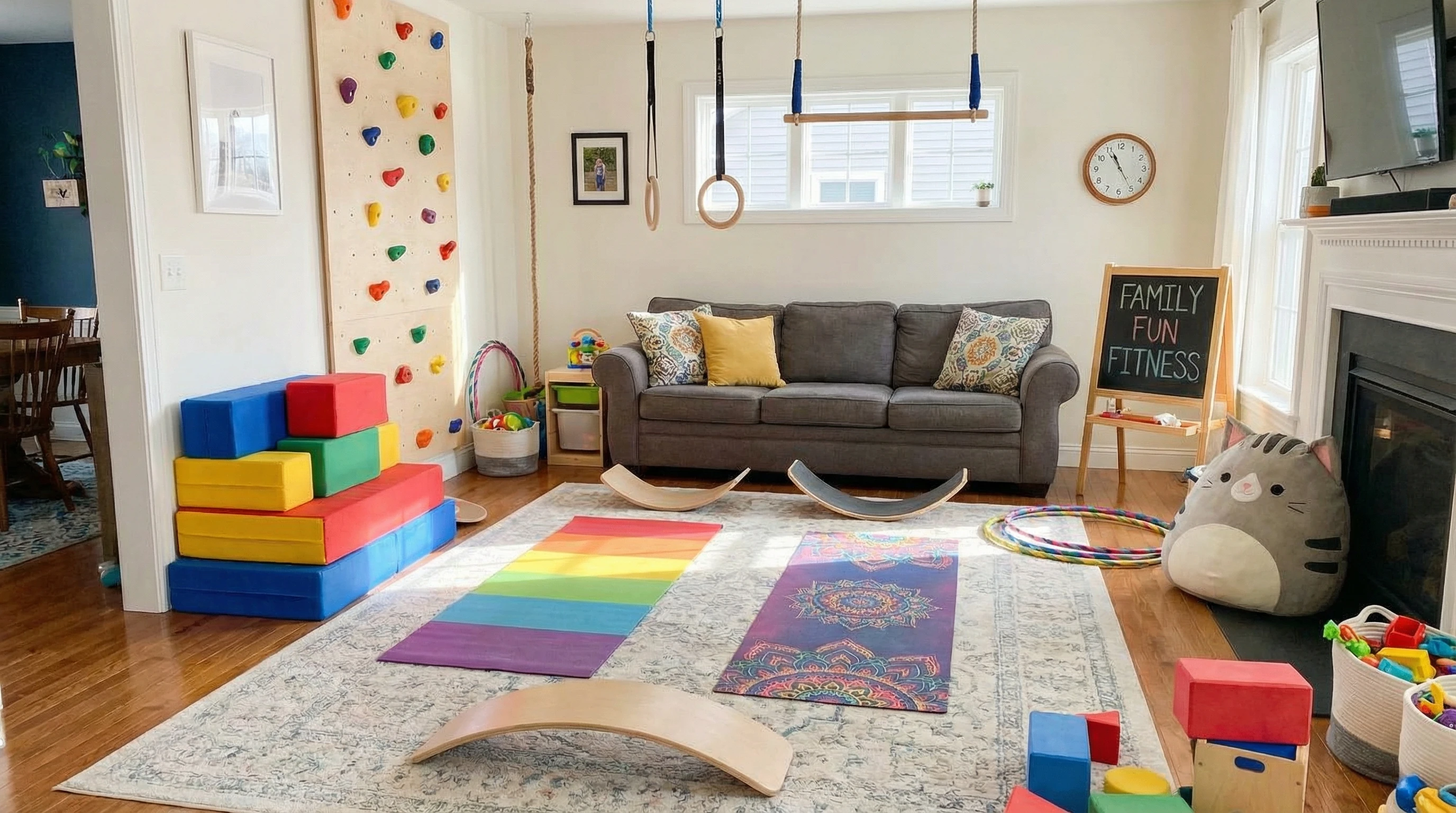
Getting started doesn’t require clearing a whole room or buying expensive stuff. I usually recommend just rolling out a yoga mat in the living room or on the patio and going from there. Here are a few ways to make your setup more kidfriendly and flexible:
- Choose open spaces: Try to find a clear spot where your kids can move around safely, whether they’re joining you or just playing nearby.
- Keep a mat handy: Using a soft surface can make everyone feel more comfortable, especially if small kids decide to copy your moves.
- Encourage everyone: Even if your kids just crawl around or climb on you mid-pushup, keeping the vibe positive and playful makes the workout feel like family fun instead of a strict regimen.
If you’re super short on time (which, honestly, is most of us), circuit training is pretty handy. Set up a handful of simple moves, do each one for 30 to 60 seconds, rest, and repeat. You can get an effective workout in as little as 15 to 20 minutes this way.
Alternatively, consider creating a playlist of energetic songs and let each track signal when to switch moves. That way, the workout feels like a dance party and everyone is more likely to stay engaged. Integrating movement into daily life, like squats during TV commercials, also helps you squeeze exercise into even the busiest days.
Sample Calisthenics Circuit: Family Friendly Moves
Kids love routines that feel more like games, so focusing on exercises with clear, fun movements works great. Here’s a goto circuit you can do together:
- Squats: Pretend you’re sitting in an invisible chair. Challenge your kids to hold their arms out like superheroes for balance.
- Pushups (Knee or Wall Modified): Kids can try these against the wall, while grownups do them on the floor.
- Bear Crawls: Great for full body movement and something both toddlers and adults can get into.
- Plank Hold: Who can hold a plank the longest? Kids often surprise parents here!
- Jumping Jacks: Enough energy for everyone, and easy to adjust to the space you have.
- Lunges: Practice balance by taking big steps forwards and back, make it a “giant step” game for the kids.
Repeat the circuit two to four times, resting as needed. Modify reps and moves to fit everyone’s comfort and ability levels. If you want more ideas, there are plenty of free online videos that demonstrate bodyweight circuits for parents and kids.
Another way to make things extra fun is to keep score on a family chalkboard, or offer small “challenges” such as “let’s hold the plank until the timer beeps.” These playful additions keep kids invested and motivated throughout the workout.
The Big Challenges and How to Overcome Them
Even with the best intentions, working out at home as a parent comes with lots of interruptions and curveballs. Here are a few roadblocks I’ve run into, and practical ways to deal with them:
- Unpredictable schedules: Sometimes kids nap, sometimes they don’t. I’ve found that smaller, more frequent movement breaks during the day work better than banking on having half an hour free.
- Lack of motivation: Some days are just hard. Having a visual calendar, a sticker chart, or even letting kids “lead” one movement can spark excitement. Also, setting goals that involve the family (“let’s do twenty squats together this week!”) helps keep things light but focused.
- Toddler “helpers”: Little ones love to climb on you. Instead of getting frustrated, try to include them by making pushups into a “see if you can crawl under the bridge” game or letting them ride on your back for planks.
- Noisy or distracting environments: If you have to pause to help someone with a snack or break up an argument, that’s okay. What matters is coming back and finishing; perfection isn’t the goal here.
Additionally, setting boundaries (such as a special workout basket of toys for the kids) and communicating your workout plan with your family ahead of time can help minimize some common distractions. The more everyone knows what to expect, the smoother things go.
Staying Consistent With a Busy Parent Routine
Regular exercise doesn’t mean working out at the same time every day. Some parents find that early mornings work best, while others get in movement after school or before dinner. Pairing calisthenics with another regular part of your day, such as homework time or evening TV, makes it easier to stick to. The important thing is to keep returning to it, even on tough days.
Don’t underestimate the value of quick stretches and mini circuits—sometimes a five minute round of jumping jacks and squats can lift everyone’s mood and count as a win. The key is to make movement a consistent part of the day, however it fits best for your family.
KidFriendly Calisthenics Moves
I’ve learned that the more fun calisthenics moves are, the more likely kids are to join in. Here’s a few activities that add a playful twist:
- Animal Walks: Crab walks and frog jumps can burn a lot of energy and feel like a game.
- Obstacle Courses: Use pillows, couch cushions, or yoga blocks to create a little indoor course. Have everyone jump, crawl, or balance as they move through it.
- Simon Says: Turn the workout into a game by leading “Simon Says” with squats, lunges, or star jumps.
Including these creative moves not only makes exercise less of a chore, but they’re also perfect for developing coordination and balance in kids. You can also take things outside for extra space and fresh air—nature walk calisthenics like walking lunges, skipping, or tree “touches” make the adventure even more exciting.
Quick Tips for a Smooth Family Workout
- Keep routines flexible: Kids’ attention spans can mix up quickly; don’t be afraid to switch things up partway through.
- Use positive reinforcement: Highfives, stickers, or a family “victory dance” builds momentum and fun.
- Focus on safety first: Keep furniture and tripping hazards out of the way, especially for energetic little ones.
- Set realistic goals: Small wins keep you coming back. Celebrate finishing a circuit, even if you took a few snack breaks in between.
Also, let each family member have a turn choosing a move, or designating a “leader” for the workout. This creates buyin and turns fitness into a group activity, not just another parental task.
RealWorld Examples: Calisthenics in Everyday Family Life
In my own experience, some of the best workouts happen out of nowhere. Backyard play can turn into a full on animal race, and laundry folding becomes a squat or lunge challenge. Some parents even turn screen time into movement time; every ad break means planks or jumping jacks. Looking for ways to integrate movement into daily routines helps the whole family stay active without making it a whole production.
- During chores: Ten pushups or squats between loads of laundry.
- At the park: Monkey bars for chinups or triceps dips on a nearby bench.
- Rainy day fun: Obstacle courses or pillow forts—add jumping over, crawling, or rolling movements.
You can even set a timer and have mini “energy breaks” during homework or craft time, which boosts focus and helps prevent afternoon meltdowns. This mindshift from “workout time” to “let’s move together” makes fitness a sustainable part of the family rhythm.
Frequently Asked Questions
Some common questions come up when starting calisthenics as a parent, especially when kids want to join:
Q: Can I do calisthenics if my kids are toddlers or babies?
A: Absolutely. Babywearing squats or crawling moves work well. Just stay mindful of safety and choose moves where everyone feels supported.
Q: How do I balance workouts and family time?
A: The big idea is blending them together. If you’re not able to get through a whole workout at once, split it up throughout the day. Any movement is better than none.
Q: Do I need special equipment?
A: Not really. A yoga mat is nice, but even a carpeted area will do the trick. Household objects make great makeshift weights or balance tools.
Q: What if my kids lose interest halfway through?
A: That’s normal. Let them move at their own pace or participate in their own way. It’s about building a positive association with being active, not completing every set perfectly.
Tying It All Together: Making Calisthenics Work for You
Blending calisthenics with a busy parent’s lifestyle doesn’t need to be complicated. Prioritizing simple bodyweight exercises and making room for fun gets the whole family moving together, even when the day feels packed. Consistency, a relaxed attitude, and a bit of creativity go a long way. Calisthenics can easily fit into chaotic mornings, unpredictable afternoons, or playful evenings. You’re giving your kids a firsthand look at healthy habits in the process, which is the real win.